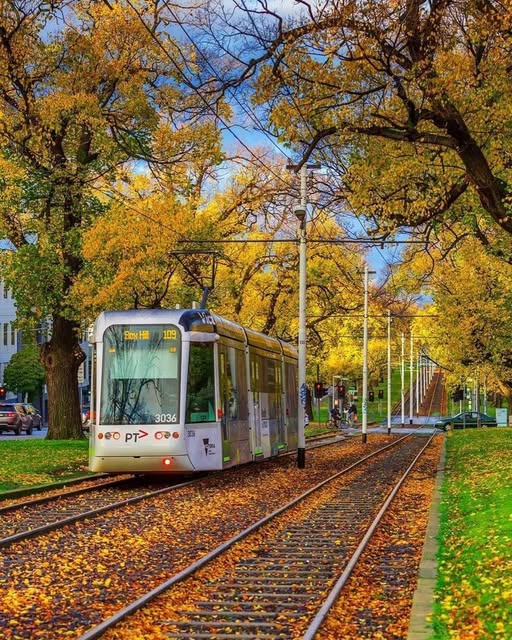
The no.109 tram skids down up Cotham Road, the leaf streets of Kew with its laurel of German cars passing by. An overcast morning with anaemic light. Gentle traffic. A few people walk their dogs, glancing up every now and then from their phones. Ding! Stopping, the doors open and close, commuters off and on. Sniffing. Some furtive coughs. Business is kept to one’s own, the carriages bereft of human noise, music quarantined to headphones, the taken seats an archipelago of strangers. Ding! A few off. No replacements. Street names scroll on the overhead display placing us between Barkers Road and Findon Crescent. Head in a book, you catch this peripherally, the words down the page more interesting than reality’s current production. Days of Shattered Faith is the third instalment of Adrian Tchkovisky’s The Tyrant Philosophers series and you’ve been hooked since sentence one. The new setting. The new characters. The further exploration of the Palleseen Sway and its brutal pursuit to correct its world. The fact that it has a frog god called Kakrops. This isn’t one hook, but a dozen surgical grade retractors opening up your imagination to implant something new, and …
Ding!
You look up. Time and distanced have accordioned, and the 109 is deep in Richmond. No more trees. Green transformed to concrete grey and a mosaic of business signage. More passersby. Shopfront windows reflect the trams in a ripple-warped zip. The smell of bodies shuffles in and squats, competing perfumes currying laundered clothes and sweating skin. Behind JMM Taos Hopper’s your eyes skate over the passengers, careful not to linger as the sunglasses aren’t dark enough to obscure your gaze. Ding! Church Street. Ding! Lennox. Ding! North Richmond Station. You close the book, shifting in your seat as the distance is eaten, Richmond opening up to the taller, broader swathe of East Melbourne. Louder now. Some of the islands in the silence shout down mobile phones while others chat happily in little knots of friendship or family about their day, each occupying their own world that, shoulder to shoulder with other people and other worlds, are contiguous yet discrete as if the tram is a sardine tin of different Melbournes.
Ding!
Ding!
And then the next Ding! Is yours and you’re taking my particular Melbourne with its scent of coffee beans and leather into unshared air, Smith Street receding off to a far-away Alexandra Parade. Not that you’ll trek that far. Your destination is far closer. You check your phone.
200m.
3 mins walking.
Double Monk.
According to Alice Blackwood, writing from habitusliving, “[f]ounders of Melbourne cordwainer Double Monk, Christopher and Nick Schaerf, are not only filling a market gap for men’s footwear, they’re fulfilling a lifelong appreciation for quality craftsmanship and ‘shoes that fit perfectly’”1. Given what you’ve seen of the business’ website, tame words. Already you sense that while Double Monk is about providing high-end footwear and its related accoutrements, the same could be said of any other seller sharing this market. What you suspect and, will come to experience soon, is that what Christopher and Nick actually seek to purvey is the embrace of a time and culture once ubiquitous, now made niche. But you’re not there yet, because the store opens at 11am and it’s only twelve past ten.
You hate being late so you’re always early. This is why you travel with a book and study the café outcrops jutting from whatever geography the hunt for shoes, denim, jackets, shirts, and sneakers demands. Days of Shattered Faith in hand, you leave Double Monk, momentarily pause before Front Office (the subject of a forthcoming Wearing Melbourne), and turn left up Gertrude Street with its array of boutiques and eateries. There’s the art deco monolith of the Builder’s Arms Hotel, two-tone façade in tan tiles and grey paint. There’s HAVN. Then Le Labo. Pickings and Parry hosts a few early browsers under welcoming downlights. You stop at Calēre Coffee, the little café a favoured stop, and order a large flat white to enjoy outside at a streetside table.
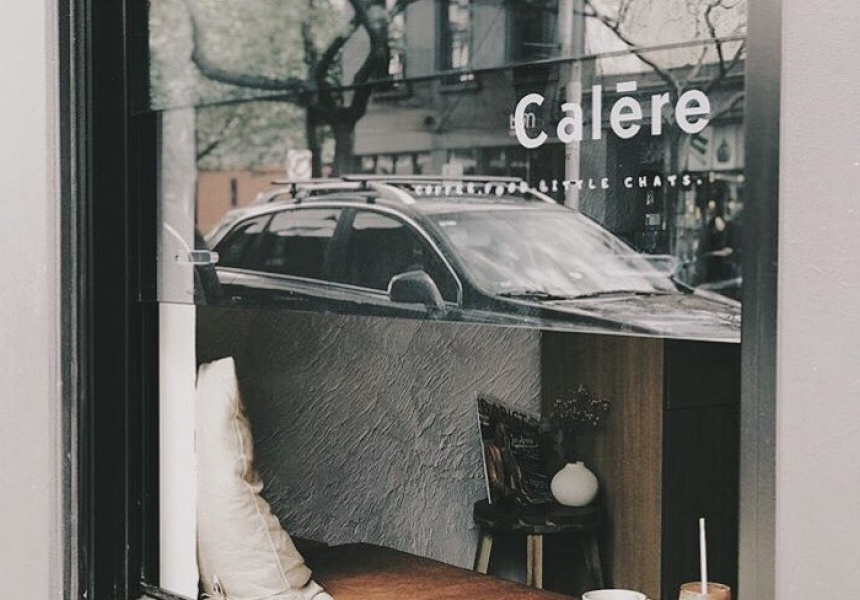
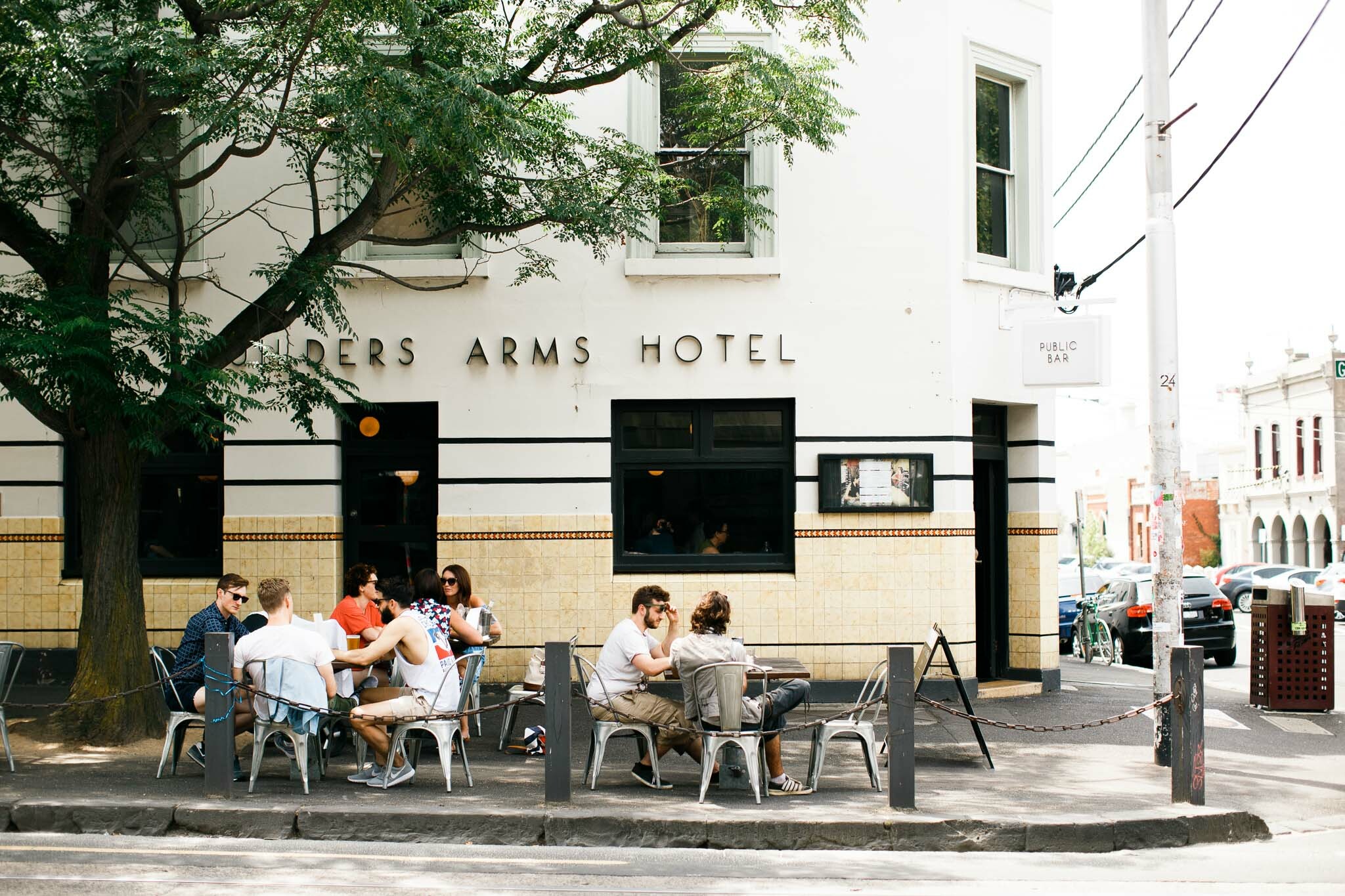
Here exists one of those other Melbournes, accessible via any of the city’s hundreds of cafes, where the minutes stretch and one relaxes in a pocket dimension of well-extracted espresso and people watching. Warmer now, you realise you’re overdressed. Off comes Freenote Cloth’s waxed canvas Riders jacket leaving you in a plain navy T-shirt, 14.5oz. Tanuki kakishibu denim, and a pair of Brass boots in crimson kudu by Grant Stone which is, especially in this early phase of summer, a whole lot of boot. Like always, the coffee is excellent. A couple at the table behind you eats breakfast. Other trams squeak and burble on their shuttling routes. Pigeons peck for crumbs, cooing, the gentle birds a fixture of every individually manifested Melbourne. Taking this time, you sip, leaning back. Savouring.
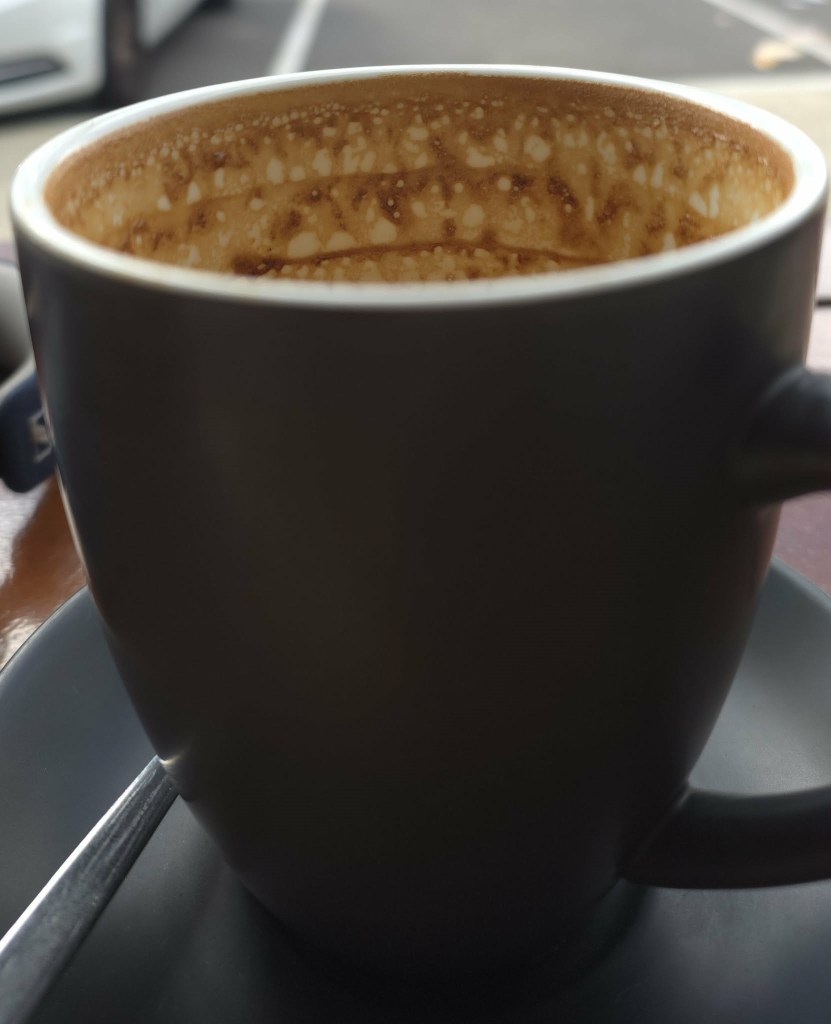
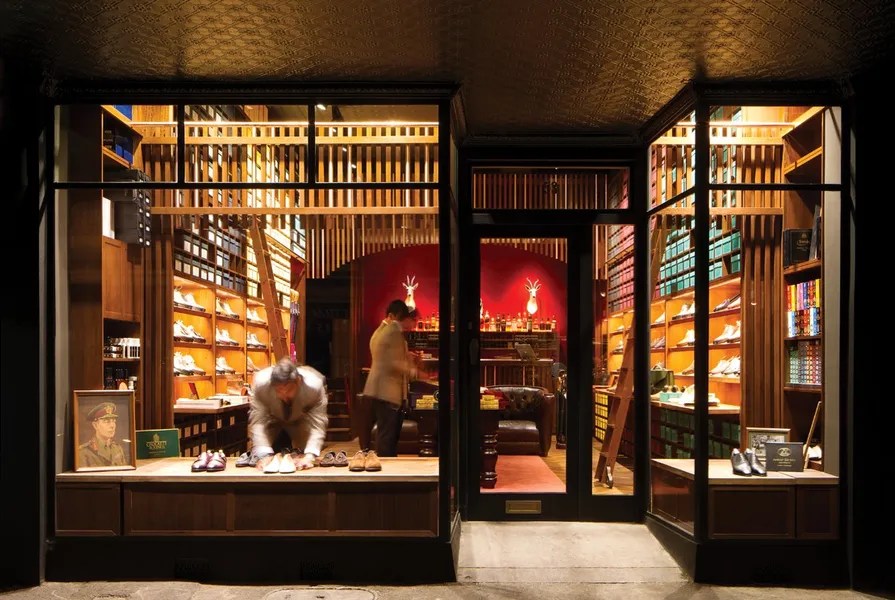
You finish your coffee, judging time taken by the sip rings down the mug, and retrace your steps to Double Monk. The door is locked. Inside, a couple listens to a sales associate while he presses the fit on a pair of oxfords. He notices you and mouths “a minute”. Nodding you pace in front of the window display, taking in the shoes, the pocket squares, the umbrellas, the socks. The couple leaves and you occupy their void, the sales associate leaving you to browse.
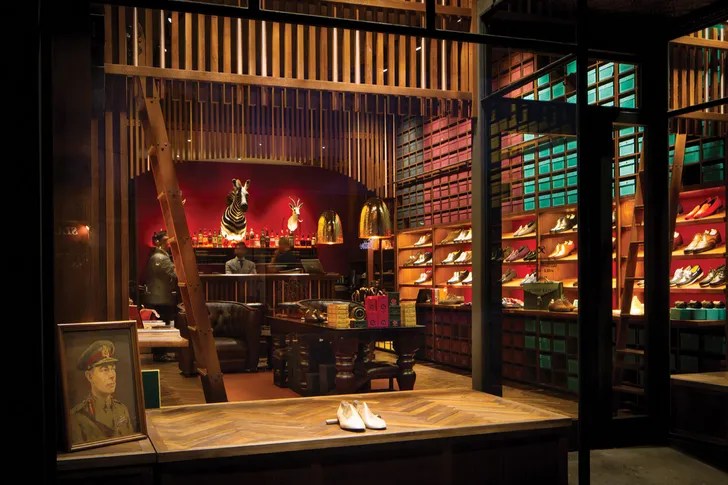
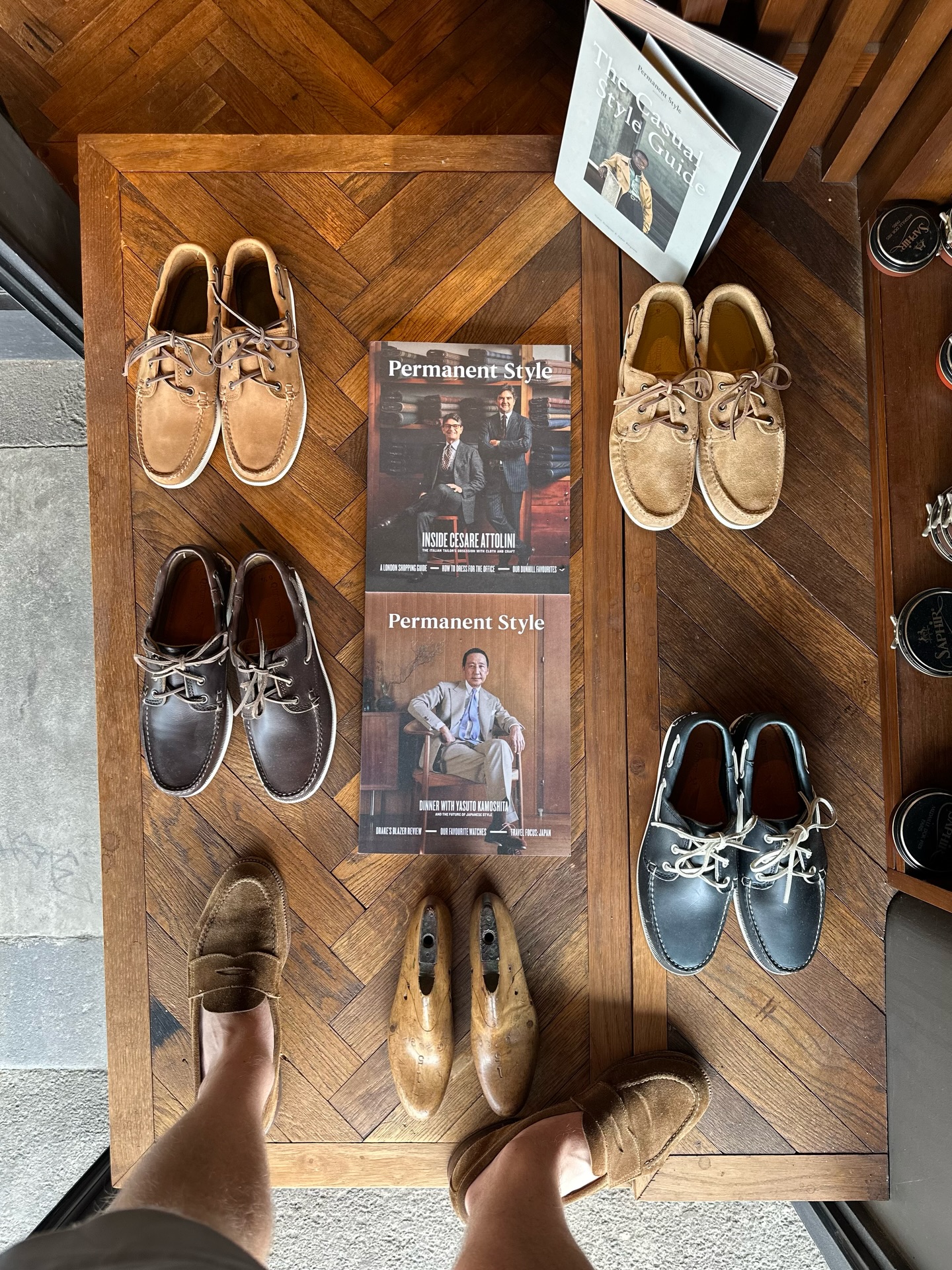
Makers assail. Edward Green. Filson. Fox. Saphir. John Lobb. Alden. Eight & Bob. Abbeyhorn. Loafers and boots and derbies displayed on shelves more redolent of a library than shoe store. Bottles of whisky and spirits glowing behind the register. Taxidermy. The chevron floorboards are well-worn and buffed. Outside, the day continues under silvery sunlight, all greys and white and shot through with cars; inside, amber breathes down over wood and suede and horn and glass.You perform a lap, fingers running of periodicals and think lookbooks, head swivelling left, right, up and down, every available square metre colonised by the objects of urban outfitting.
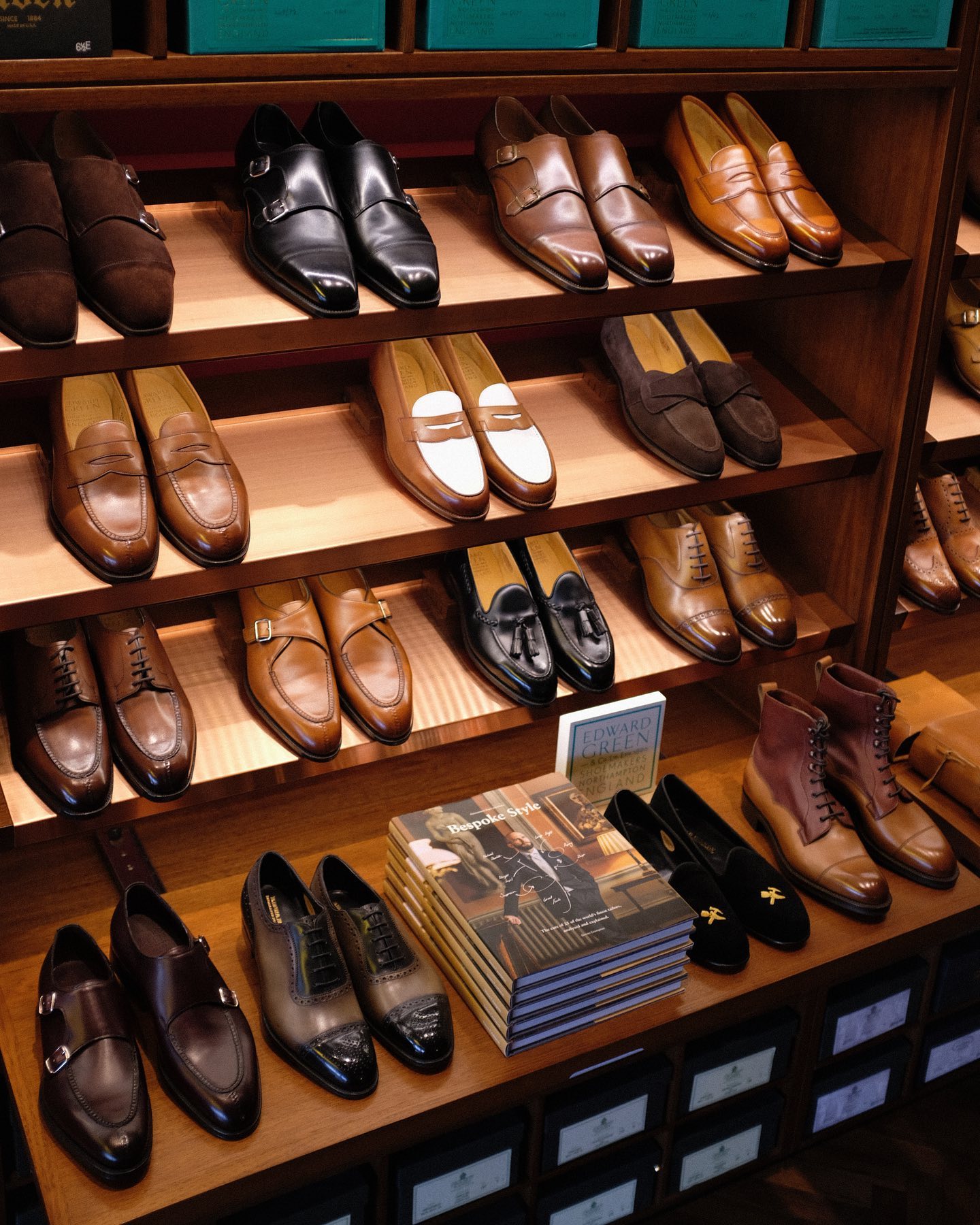
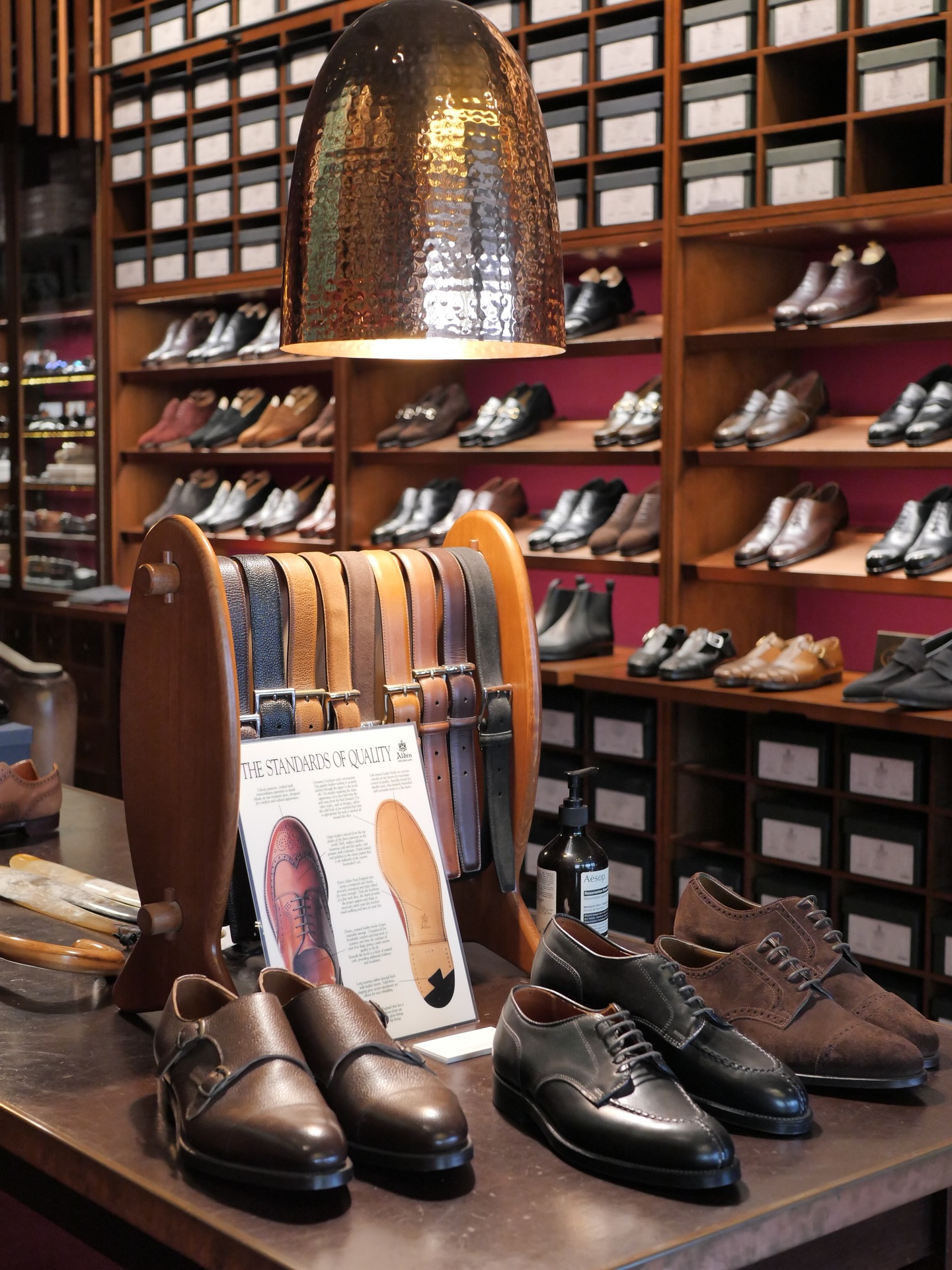
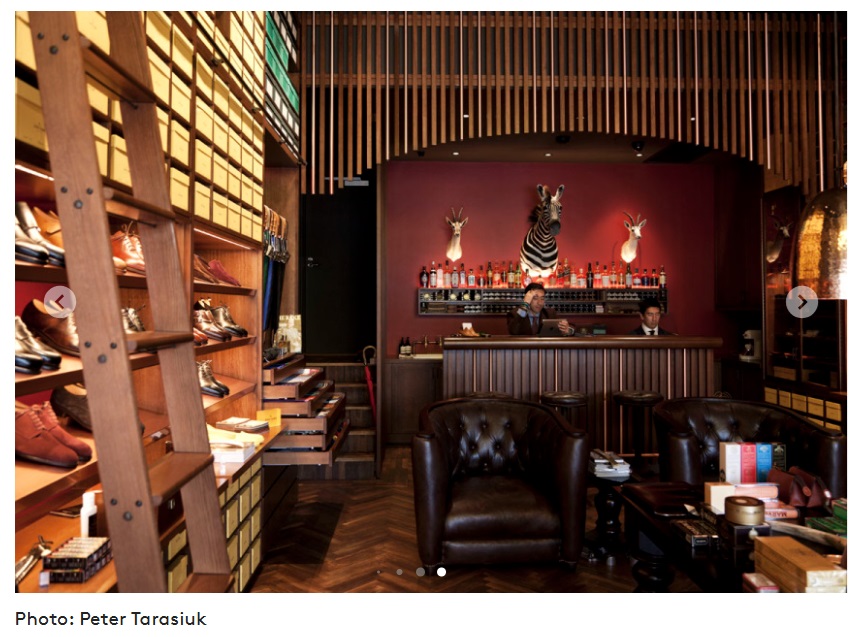
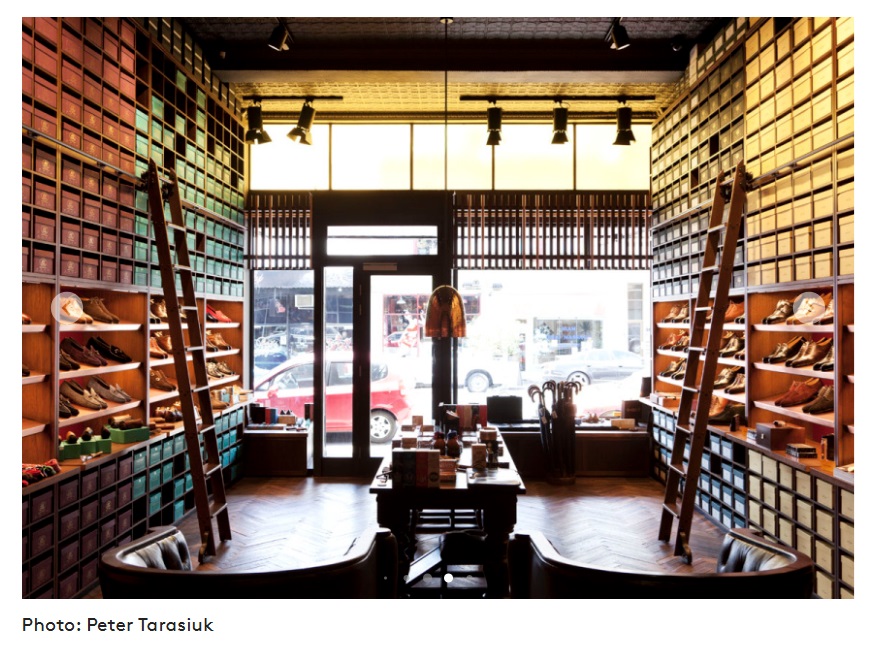
The Fitzroy store is the physical expression of a philosophical design spelled out on their website. It reads: “Double Monk is a purveyor of top-tier men’s shoes and appurtenances based in Melbourne and Sydney, Australia. [Where] we stock things that will last for decades, not years.”2 Long time is invoked by the decree of quality. Last, a potentially inadvertent play on words, suggests not only the endurance of a product, but the shape a product encapsulating the flesh and bone—a shape that becomes part of you, moulding to the body, conforming to its life. Appurtenances is an amazing word. A word embossed with a particularly antique pattern in keeping with the About Us dictates.
“We do not deal in fickle wares. Fashion is contrary and slave to irony, and it chases tomorrow at the expense of today. Unfortunately, many things you can buy these days are conceived and designed merely to negotiate an antagonistic, tired and crowded market. We instead present our customers with items in which the qualities are plainly intrinsic to the product as it is defined.”3
Appurtenances. Appurtenances. Appurtenances. The word rattles about your mind as you heft a chukka boot in chocolate suede. A word that encourages an appreciation for its own etymological texture, old French based on late Latin: appertinere = belong to. The shoes belong to a specific stylistic register broadcasted from the cobbled streets of London or Paris where one can still hear the swish of grey flannel trousers. The store belongs to another time. A time not wholly lost in the past nor completely circumscribed by the present, but straddling something of both. An anachronistic appurtenance of appurtenances collected and constructed like some sort of fane. Light glints off the twin brass buckles of black calf monk strap.
But you’re not here for the boot or the shoe. You’re not here for Alden, Edward Green, Rubinacci, Quoddy, or John Lobb.
No, you’re here for Crockett & Jones.
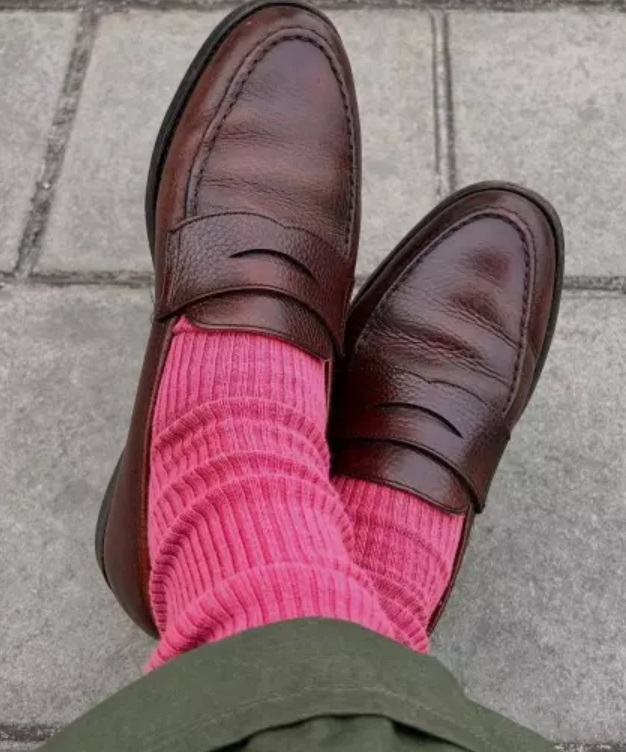
Established in 1879, Northampton, Crockett & Jones is a name synonymous with British shoemaking. Proud not only of its heritage, the cordwainer stands behind and in in “Made in England” stamp, employing more than 380 workers and producing around 100,000 pairs of shoes a year. “We’re still in the same factory, still manufacturing shoes and boots in the same traditional way,” claims the shoemaker. “The standards were set by our founding fathers, four generations ago, who determined to make the best-quality shoes possible”4. No doubt it is such conviction which appeals to Double Monk’s Christopher Schaerf whose attitude to the bottom of the leg demands the comfort and longevity quality often affords when he argues that “we like to say that you should spend as much as you can afford on your shoes and your bed, because if you’re not in one you are in the other”5.
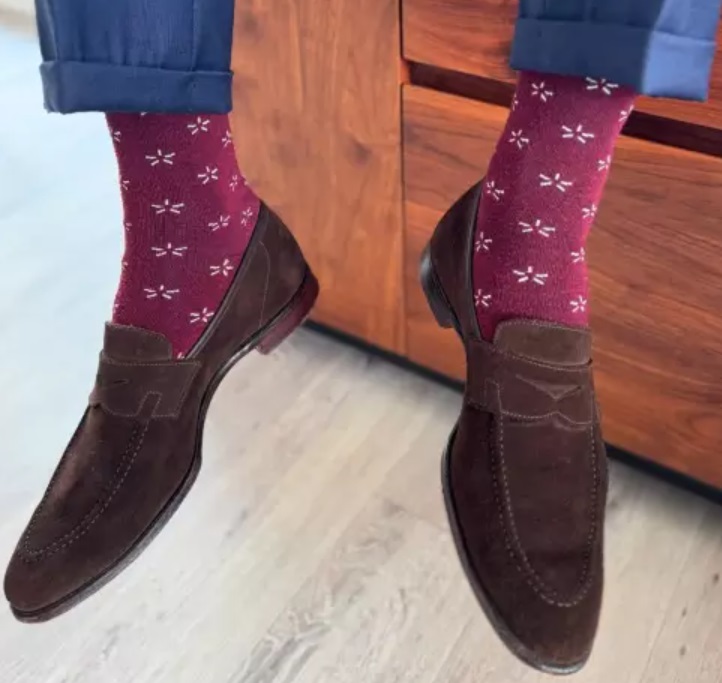
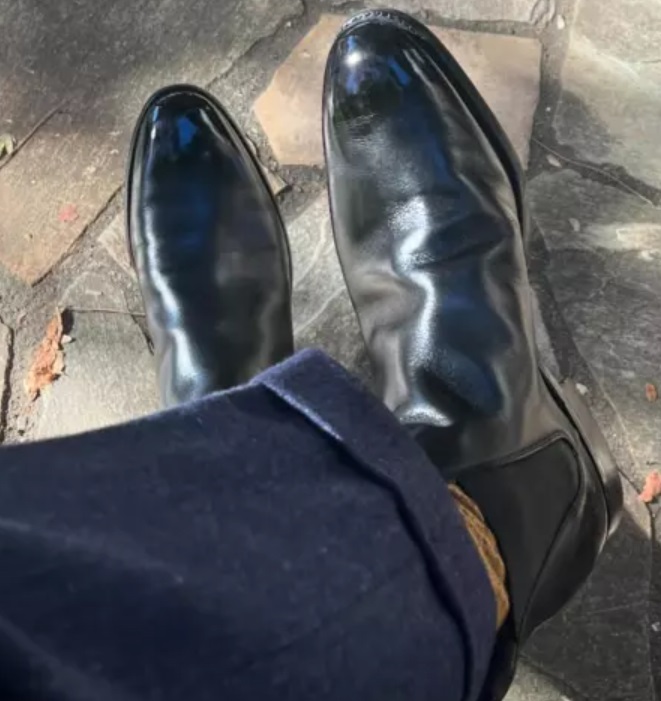
“Can I help you with anything?” the sales associate asks.
Holding out the penny loafer in your hand, you nod. “Do you have this in a US ten and half?”
“Just a moment. Let me check.”
While I’ve been absorbed in leather, two other people have entered the store—another sales assistant and what looks to be a manager/owner. A computer is consulted. Having down my due diligence on their website, I’m confident that there is at least one left in my size. After the computer, the stacks of boxes under and above the display pairs are searched. Lo and behold, one remains. The shoe in question is an unstructured penny loafer in dark brown country calf named the Vaucluse after the Sydney suburb, an exclusive collaborative effort between Crockett & Jones and Double Monk (more on this loafer in another post … patience). Taking a seat in leather armchair, a shoehorn is proffered along with the shoes. One foot slides in. Then the second. Standing, you take a testing step, then another, walking slowly about the store. Discussing the maker, the sales assistant waxes lyrical about the leather, about the comfort of rubber soles, and the benefits of goodyear welting. Much of this you already know as a trudger of the boot and their long break-in periods, but the words don’t really matter. The language is a shared one, a familiar patois
Smiling, he asks, “What do you think?”
What do you think? You think that your feet have stepped through a threshold into the world framed by Northampton shoemaking and Melbourne-based curation. For a moment, the city continuing on the other side of the shop windows dissolves, its reality of e-bikes and ubers and all things brunch attenuated by the touch of pebbled grain and turpentine whiff of shoe polish. Decades of heritage surround you, inviting a different mindset, an altered worldview carried along by a slower appreciation of time’s passage. You see the steps you will take in the loafers, the sunny afternoons and cooling evenings, Christmas parties, weekend jaunts, and the many days of just because. You feel the potential kilometres through the midsole and the successful ache after a long day’s wear. And romantic as this may be, as idealised and unreal, the idea of it is tantalising. To step into and through a world and, in stepping, make it tangible, experience through the medium of soles. Having spent a life reading and writing it, you are aware of fantasy’s ability to change the way one thinks about reality, about themselves and their relationship to the world/s around them. This is what the shoes allow in a potent, albeit small way.
Rolling onto your toes, you bounce. “I’ll take them.”
The shoes are boxed and placed in a stout paper bag emblazoned with the store’s name and logo. You stomp back into you boots and lace up the speed hooks. From behind the register a tin of Saphir Pate de Luxe Wax Polish is chucked in for free along with a few parting words of aftercare wisdom. Umbrellas lean against the wall. A canister bristles with deer bones destined for polishing shell cordovan. A synapse sparks: should you buy some cedar shoe trees? Probably, but while cedar grows as a tree, money, as the saying goes, does not. Another time. Anon. Anon. Anon.
Hands are shaken. The door opens and the spell breaks as you wash up onto the noisy shores of consensus Melbourne, the rushing current of foot traffic carrying you away from Double Monk out towards the Smith Street tram stop. Here you wait. Waiting, you stand, the bag with his box, the box with its shoes, between your feet. Reality doesn’t seem quite real. There were worlds jostling in the tram. There’s a world in Days of Shattered Faith. There’s a world in the box which can be slipped on and off, on and off, ever available with the aid of a shoehorn and a thin pair of socks. The 109 crests the rise and starts down the hill, full of all the people lost in their own worlds, their perception making it so, making and reshaping it to suit their needs. You heft the bag. All those worlds packed like sardines. What’s one more?
Ding!
- Editorial Team, https://www.habitusliving.com/projects/double-monk, accessed 22.02.2026 ↩︎
- https://doublemonk.com/pages/about, accessed 22.02.2026 ↩︎
- ibid. ↩︎
- Crockett & Jones, “The Last Word #3”, https://row.crockettandjones.com/blogs/the-article/the-last-word-3, accessed 22.02.2026 ↩︎
- Le Noeud Papillon 2014, “Christopher Schaerf From Double Monk Answers A Few Questions On Shoes”, https://lenoeudpapillon.blogspot.com/2014/08/christopher-schaerf-from-double-monk.html, accessed 22.02.2026 ↩︎
 Narrative Gauge Sweater
Leave a comment